
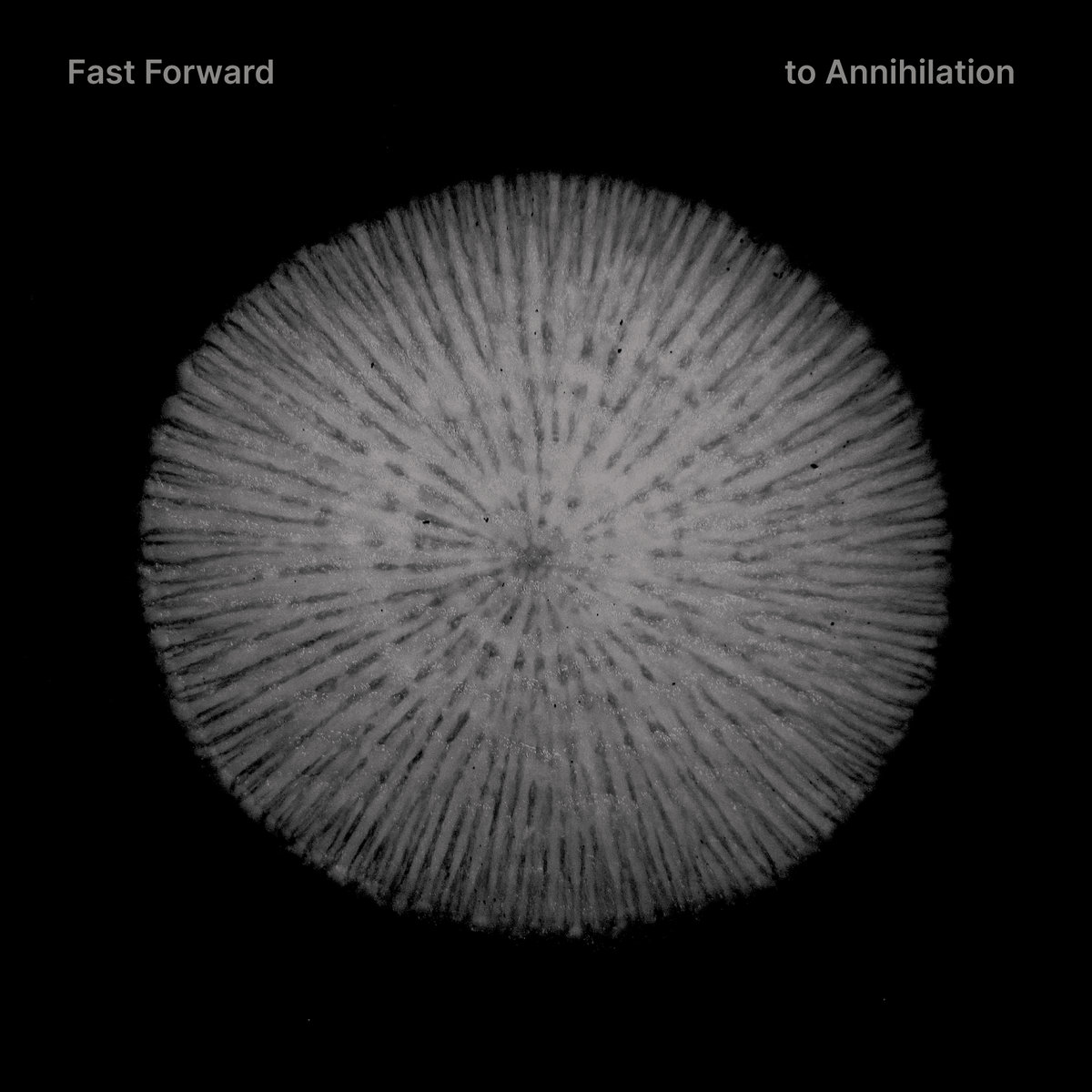
A sonic tribute to the world of plants.
A collaboration between Kiko C. Esseiva and Iason (ps stamps back).
mixed and mastered by Kiko C. Esseiva
Kiko C. Esseiva – guitar, synth, drum machine
listen/download: https://tiltrecordings.bandcamp.com/album/fast-forward-to-annihilation-2
In memory of Kiko C. Esseiva (1975-2024)
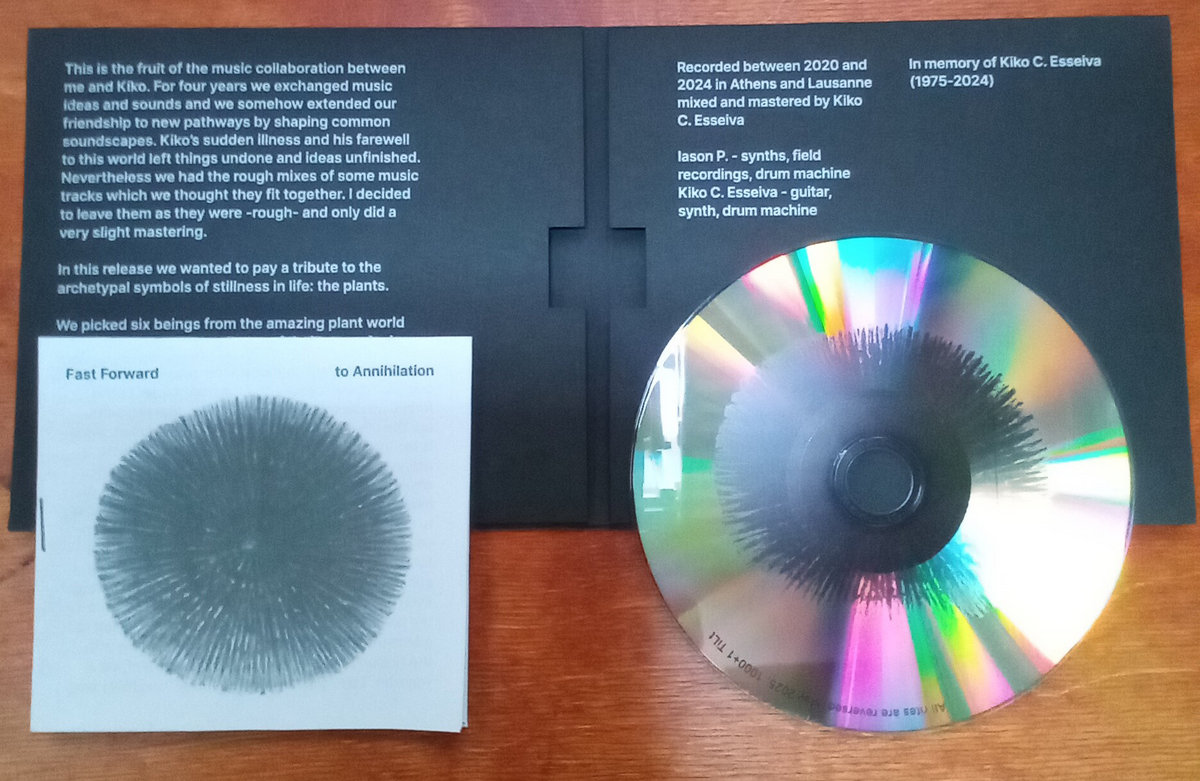
cover artwork: Kiko C. Esseiva
layout: Sotiris Gekas
This is the fruit of the music collaboration between me and kiko. For four years we exchanged music ideas and sounds and we somehow extended our friendship to new pathways by shaping common soundscapes. Kiko’s sudden illness and his farewell to this world left things undone and ideas unfinished. Nevertheless we had the rough mixes of some music tracks which we thought they fit together. I decided to leave them as they were -rough- and only did a very slight mastering.
In this release we wanted to pay a tribute to the archetypal symbols of stillness in life: the plants.
We picked six beings from the amazing plant world and we tried to tell a small part of their story. And maybe temporarily detach ourselves from a world of fast moving madness and the destruction of everything natural by the accelerating technological nightmare.
released June 1, 2025
One of the dogmas that characterize our era is planned obsolescence. And the main target of this forced obsolescence is not technological products, but the entire natural world, ourselves included. What is technological feasible becomes sooner or later obligatory. Thus, nothing can just happen by itself anymore; all natural processes, from the growing of trees to our immune system and from the river’s flow to our birth (and death) are judged illogical and dangerous. They have to be mediated by technological solutions – ultimately, every natural thing has to be enhanced with or completely replaced by technology. Even time itself is “updated”: we no longer go from the past to the future, but we are trapped instead to a techno-messianic version of eternal present with the illusion that whatever is, always was and will always be. This “capitalism of no future” swallows time and space, annihilating both.
And because there is literally nowhere to go, people have to move fast, like mouses in a laboratory wheel. Speed thus becomes an obsession, alas, we do not accelerate to a bright future but to a dead, ever expanding present.
In this fast forward march to madness, we were inspired by the ever-patient world of plants and the amazing stories they have to offer.
– Boquila trifoliata
Mimicry is not rare among plants – rye, for instance, evolved through mimicking wheat. Other plants mimic insects or other toxic plants to avoid predators, or pollinating insects to attract them. But boquila trifoliata does something unprecedented; it does not mimic a specific plant (something that could be explained through evolutionary theory) but any plant that happens to be nearby and fits its purposes. This south american vine can look very similar to a variety of trees and plants – even with no direct contact with them. How such an amazing polymorphism can be explained? Can plants actually see? Most plants have light-sensitive organelles and many climbing plants (the pumpkin or bean among them) will direct their shootouts to a nearby vertical piece of wood, but seeing is widely considered the exclusive privilege of animals and insects. Which only indicates a natural world far more complex and mysterious than our arrogant beliefs want it to be.
– Darlingtonia
Also known as cobra lilly, due to its amazing snake-resemblance, darlingtonia enriches its poor-nutrient diet that the acidic or debased soils where it grows can offer, with high-quality protein. In other words it is a hunter – and a killer. Now, many plants trap and kill insects, even small mammals, with the genus of nepenthes being the most famous among them, but darlingtonias’s hunting strategy is exceptional.
Behaviorist psychologists are not known for their empathy or kind heart – one of their most famous experiments is aptly called pit of despair. This was essentially a small cage, deep into the earth, where monkeys were imprisoned for many months. A mesh on the roof offered a viable way to escape – but it was slippery, so the animals first hoped and then after many tries, with their hopes crashed, they simply got exhausted and despaired. Who in his sane mind will device such a mechanism, you might wonder? And what happens to a society who has designated these sadistic sociopaths as top advisers to their government (as it happened during the pandemic years when teams of psychologists were working with many western governments in order to establish social obedience to the pandemic regulations), we would add.
Darlingtonia’s feeding method would no doubt excite behaviorists. It lures its prey with nectar and once inside its pitcher trap, the insects get confused by the light that passes inside, leading them to try again and again false exits, until exhaustion or despair makes them fall down inside the plant, where they drown in a small pond full of symbiotic bacteria which break down the unfortunate bugs into precious nutrient for both themselves and darlingtonia. The natural world is beyond cruelty and tenderness – nature is neither good nor evil; it just is.
– Dandelion
This archetypical weed, the most common symbol of untamed nature in gardens and fields, thrives around the human environment – despite humanity’s merciless war against it. It is among the pioneering plants in nature’s recuperation of abandoned buildings and a common invader in well kept lawns. It flowers uninvited in balcony pots, cracks in cement, factory yards, destroyed land, offering a humble, yet powerful and sweet promise of spring and of springs to come.
– Drakea livida
Orchids are masters of deception. They mimic female pollinating insects so good that it is often the case that although a female insect is near by, males will prefer, much to the female’s despair, to copulate with the orchid’s flower than the real insect. Proving among other things that great art looks more real than reality itself.
Drakea livida concentrates all its art of seduction for only one pollinating species: the thinner wasp. How does it feel for the wasp to copulate with a flower more beautiful than any true female can ever be? And most importantly how does it feel for the orchid to be pollinated by a wasp madly in love? Does it get tremors throughout its system when the wasp climaxes? Does it get excited when the male wasp is near by? Do they secretly caress each other after the act? Fortunately, we don’t know.
– Acacia
All species of acacia produce highly potent alkaloids and toxins, the most famous among them, the psychoactive DMT. The most amazing one though, is what it uses to mind-control the ants. Acacia attracts ants with nectar and sometimes whole wooden structures to house the ant-colonies. And the ants become its personal bodyguards, so to speak, attacking other insects, or even mammals. Nothing really amazing here, ants form this kind of symbiosis with other plants as well. What makes acacia look like a creature from the pioneering era of science fiction though, is that every spring, the period when the seeds germinate and plants in general grow, acacia’s nectar contains a mix of toxins that makes the ants super aggressive; they will attack everything in the vicinity, mainly plants, even risking their lives. So, acacia can have the very rare privilege to grow alone in small area having the exclusive rights to all the resources. Her mind controlled slaves return back to being the normal mean motherfuckers, that ants generally are, during summer, only to lose their mind again next spring.
What toxoplasma does with the mouse’s mind is spooky, no doubt, but acacia moves spookiness to another level: like in CIA’s wet dreams, it is able to chemically control other species mind at will.
– Encephalartos Woodii
It is called the loneliest creature in the world and for a good reason. This south african cycad is considered extinct in its natural habitat since more than a century and all surviving specimens in botanical gardens are clones from the same, male, plant. But encephalartos need to exchange pollen with a female in order to be reproduced. And all females of its species are considered long gone. Still, Encephalartos Woodii persists, in a world full of copies of itself, in a futile wait for the Other. But who knows, maybe one day its long wait will be rewarded – nature always finds its way.
Comments are closed.